Improve your crushing circuit with an efficient grinding mill
Best-practice grinding starts with understanding what enters the mill. Variations in crushed ore size, hardness and other raw material properties can disrupt grinding mill performance, affecting throughput, energy consumption and target grind size. Reliable measurements from the crushing stage through the grinding circuit provide the process visibility needed to respond to these changing conditions.
Accurate monitoring of mass flow, slurry density, mill level and particle size helps stabilize control loops and optimize the grinding process. This enables operators to identify inefficiencies earlier, reduce unplanned downtime and improve grinding efficiency. Reliable instrumentation helps maximize grinding mill performance and uptime while maintaining stable throughput under changing ore conditions.
Explore your measurement points in your crushing circuit
A fully instrumented crushing circuit can maximize throughput, detect blockages before they occur and improve uptime. See through different measurement points we recommend.


Run of mine (preparation)

Feed entry stage

Feeder breaker / primary crusher

Rolling screen

Secondary crusher

Ball mill


Stabilize your crushing circuit and maximize throughput
In crushing circuits measurement of process control parameters can be very difficult. Dust, noise, irregular material surfaces and rapid changes make reliable measurement challenging. Poor control of feed and output can result in crusher starvation or empty belts, which could lead to equipment damage and future downtime.
- Crusher feed and surge-bin level: Maintaining an appropriate level and provide stable crusher loading is critical for managing plant throughput and reducing the risk of equipment damage. Using the Micropilot FMR67B is the best option for stable crusher utilisation, reduced interruptions and improved throughput
- High-/low-level protection in bins and chutes: Prevent overfill, detect low material conditions and support reliable material transfer with Solicap M FTI56 and Solicap S FTI77
- Chute, grizzly and screen blockage detection: Crusher performance is not exclusively controlled by the crusher itself. A blocked chute, grizzly or screen can interrupt material flow and destabilize the upstream and downstream circuit. The solution of a non-contact material/blockage detection instrument, the Soliwave FQR57/FDR57 microwave barrier is industry best practice for improving crusher availability
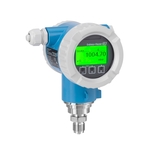
- Crusher hydraulic-system monitoring: Multiple measurement points should be included for an complete system health overview. Monitoring parameters such as hydraulic pressure and oil pressure with the Cerabar PMP71B, as well as the Promass I 300 for mass flow, density, viscosity and temperature of the oil for the crusher circuit improve equipment health visibility, quickly identify abnormal conditions and support predictive maintenance
- Crusher dust extraction: continuously measure dust concentration in crusher extraction ducts using the DUSTHUNTER SP30, helping monitor dust-collection and filter performance, detect changing dust loads and support effective dust control around the crushing process

Achieve effective grinding performance with better process visibility
Grinding optimization depends on understanding both the material entering the mill and how conditions change throughout the circuit. Measuring moisture, loading, flow, density and particle size provides operators with a more complete picture of mill performance. Combining these measurements helps maintain stable operation, improve throughput and achieve the required grind for downstream recovery.
- Mill feed moisture: measure the moisture content of incoming ore using Solitrend MMP40 inline moisture measurement, helping optimize process water addition and maintain more consistent grinding conditions
- Grinding mill feed and discharge: measure solids flow in the circuit with the combination of the Promag 55S and the Gammapilot FMG50, to understand the actual mass entering the mill, helping maintain consistent loading as feed conditions change
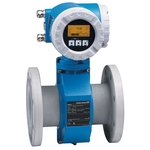
- Mill discharge slurry flow: measure volumetric water using Promag W 500 electromagnetic flowmeter and volumetric slurry flow using the Promag 55S, providing reliable visibility of mill throughput and supporting process enabling accurate mass balance calculations
- Online particle size: continuously monitor particle size and shape with SOPAT image-based analysis at critical locations such as mill discharge, cyclone overflow or flotation feed, enabling operators to detect changes in grind sooner and maintain the particle-size range required for efficient downstream processing
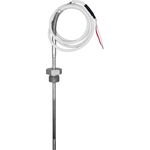
- Mill bearing temperature: continuously monitor bearing temperature using the iTHERM TST310 temperature sensor, providing early indication of abnormal heat buildup to help protect critical mill components, support condition monitoring and reduce the risk of unplanned downtime
Frequently asked questions on grinding mill performance
Grinding mill performance depends on more than mill loading alone. These common questions address how process control, instrumentation and maintenance can support higher throughput, grinding efficiency and asset uptime.