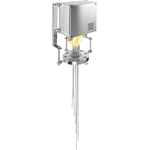
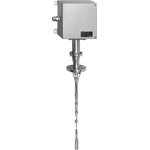
.jpg "Multipoint temperature installation for molten salt storage tanks")
Summary
Molten salt thermal energy storage systems require reliable temperature monitoring to maintain efficiency and protect critical infrastructure. High process temperatures, thermal stratification and heat transfer can impact storage performance and asset lifetime if left undetected. Endress+Hauser addresses this challenge with a comprehensive temperature profiling concept that monitors the molten salt inventory, tank wall and foundation. The solution enables early detection of abnormal thermal behavior and supports safe, efficient and reliable plant operation.
The benefits: Better control of critical thermal conditions
Early warning
Thermal anomalies detected
Asset protection
Reduced structural risk
Higher efficiency
Improved energy utilization
The integrated temperature monitoring concept provides visibility into thermal conditions across the molten salt storage system, including the storage medium, tank wall and foundation. By combining multiple temperature profiling technologies, operators can identify developing thermal issues before they affect storage performance or asset integrity.
The solution supports the detection of thermal stratification, abnormal heat transfer, insulation degradation and foundation temperature deviations. This information enables more informed operational decisions and helps maintain stable storage conditions during charging, storage and discharging cycles.
Expected benefits include improved process safety, better utilization of stored thermal energy, reduced maintenance risk and enhanced protection of critical infrastructure. The comprehensive temperature profile also supports long-term asset management strategies and contributes to reliable plant availability throughout the operational lifecycle.
The challenge: Prevent thermal damage and energy losses in molten salt storage tanks
Molten salt energy storage is a key technology in concentrated solar power (CSP) plants and industrial thermal storage systems. To maximize storage efficiency and ensure long-term asset reliability, operators need precise insight into temperature conditions throughout the entire storage system. However, high operating temperatures, thermal stratification, cyclic heating and cooling, and corrosive process conditions make reliable temperature monitoring challenging.
Without representative temperature profiles, abnormal heat transfer can remain undetected. This may lead to hot spots, insulation degradation, structural stress, salt solidification, reduced storage efficiency, or long-term damage to the tank and foundation. Because storage tanks are large assets with limited accessibility and long maintenance intervals, operators require a reliable way to monitor temperature distribution across the molten salt, tank wall and foundation throughout the plant lifecycle.


Our solution: Detect abnormal thermal behavior before it impacts safety and performance
Endress+Hauser addresses the challenge with a multi-layer temperature monitoring concept that provides complete visibility into the thermal behavior of the molten salt storage system. Instead of relying on individual measuring points, the solution combines dedicated multipoint technologies for each critical area of the tank, enabling operators to detect abnormal temperature conditions before they affect safety, efficiency or asset integrity.
iTHERM MultiSens Flex TMS31 is installed vertically inside the molten salt storage tank and measures the temperature profile throughout the stored salt inventory. This enables operators to monitor thermal stratification during charging and discharging cycles, identify uneven heat distribution and verify that thermal energy is stored and released efficiently. By providing a representative temperature profile over the entire tank height, the system supports optimized storage performance and early detection of process deviations.
To protect the mechanical integrity of the storage asset, iTHERM MultiSens Bundle TMS01 is installed around critical sections of the tank shell and insulation system. The solution continuously monitors wall temperatures and helps identify abnormal heat transfer through the tank structure. This allows operators to detect insulation degradation, developing hot spots or excessive thermal stress at an early stage, reducing the risk of accelerated material aging and costly repairs.
iTHERM MultiSens Slim TMS21 is integrated into the tank foundation area, where temperature monitoring is essential for protecting the concrete structure beneath the storage tank. The system detects abnormal heat migration from the molten salt inventory towards the foundation and provides early warning if temperature levels approach critical limits. This helps prevent long-term structural damage, supports asset lifetime extension and contributes to safe operation of the entire storage facility.
Together, the three technologies provide a complete thermal picture of the storage system. Operators gain reliable information about the condition of the molten salt inventory, the tank structure and the foundation simultaneously. This holistic approach enables earlier intervention, improved energy utilization, reduced maintenance risk and enhanced protection of high-value storage assets throughout their operational lifecycle.
.jpg "Temperature profiling in molten salt storage tanks")
.jpg "Temperature profiling in molten salt storage tanks")